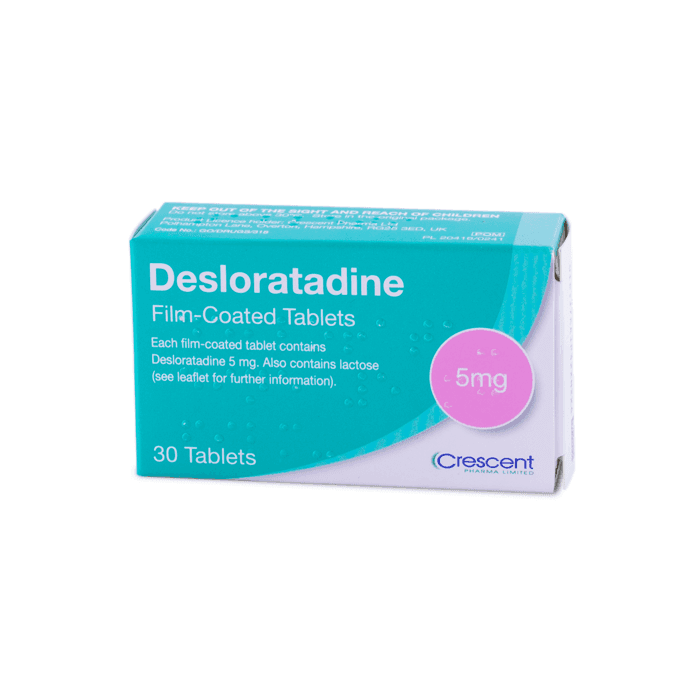
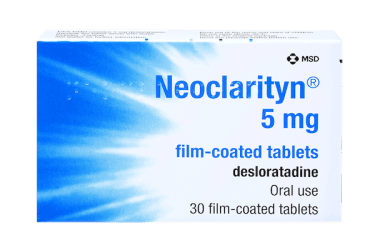
Neoclarityn 5mg - 30 Tablets
£11.99
Pay in 4 interest-free payments of £12.75 with
3 interest-free payments of £17.00 with
18+, T&Cs apply. Credit subject to status.
Desloratadine is a non-drowsy antihistamine used to treat the hay fever or allergic rhinitis. It eases symptoms such as sneezing, watery eyes, and runny nose.
Free standard delivery on orders over £40 and typically arrive in 1–2 business days.
For full details on our returns policy, visit our delivery & returns page.
Our pharmacy team is here to help. Get in touch if you have any questions about your order or need advice on a product.
It helps control your allergic reaction and its symptoms.
Desloratadine should be used to relieves symptoms associated with allergic rhinitis (inflammation of the nasal passages caused by an allergy, for example, hay fever or allergy to dust mites) in adults and adolescents 12 years of age and older. These symptoms include sneezing, runny or itchy nose, itchy palate, and itchy, red or watery eyes.
Desloratadine is also used to relieve the symptoms associated with urticaria (a skin condition caused by an allergy).
These symptoms include itching and hives.
Relief of these symptoms lasts a full day and helps you to resume your normal daily activities and sleep.
For more information about allergies, click here.
an allergy to desloratadine, or any of the other ingredients of this medicine or to loratadine.
poor kidney function.
medical or familial history of seizures.
Pregnant or breastfeeding.
Desloratadine may be taken with or without a meal.
Use caution when taking Desloratadine Actavis with alcohol.
Always take this medicine exactly as your doctor or pharmacist has told you. Check with your doctor or pharmacist if you are not sure.
Adults and adolescents 12 years of age and over
The recommended dose is one tablet once a day with water, with or without food.
This medicine is for oral use, swallow the tablet whole.
Regarding the duration of treatment, your doctor will determine the type of allergic rhinitis you are
suffering from and will determine for how long you should take Desloratadine.
If your allergic rhinitis is intermittent (presence of symptoms for less than 4 days per week or for
less than 4 weeks), your doctor will recommend you a treatment schedule that will depend on the
evaluation of the history of your disease.
If your allergic rhinitis is persistent (presence of symptoms for 4 days or more per week and for more
than 4 weeks), your doctor may recommend you a longer term treatment.
For urticaria, the duration of treatment may be variable from patient to patient and therefore you
should follow the instructions of your doctor.
Relieves Symptoms Associated With Allergic Rhinitis Active Ingredient: Desloratadine Next Day Delivery Available Buy With Confidence From UK Registered Pharmacy
5 mg once daily
Hay fever is usually worse between late March and September, especially when it's warm, humid and windy. This is when the pollen count is at its highest. Check if you have hay fever Symptoms of hay fever include: sneezing and coughing a runny or blocked nose itchy, red or watery eyes itchy throat, mouth, nose and ears loss of smell pain around your temples and forehead headache earache feeling tired If you have asthma, you might also: have a tight feeling in your chest be short of breath wheeze and cough Hay fever will last for weeks or months, unlike a cold, which usually goes away after 1 to 2 weeks. How to treat hay fever yourself There's currently no cure for hay fever and you can't prevent it. But you can do things to ease your symptoms when the pollen count is high. Do put Vaseline around your nostrils to trap pollen wear wraparound sunglasses to stop pollen getting into your eyes shower and change your clothes after you've been outside to wash pollen off stay indoors whenever possible keep windows and doors shut as much as possible vacuum regularly and dust with a damp cloth buy a pollen filter for the air vents in your car and a vacuum cleaner with a special HEPA filter Don't cut grass or walk on grass spend too much time outside keep fresh flowers in the house smoke or be around smoke – it makes your symptoms worse dry clothes outside – they can catch pollen let pets into the house if possible – they can carry pollen indoors
Common: the following may affect up to 1 in 10 people