 UK Based Pharmacy
  Discreet Packaging
  Next Day Delivery


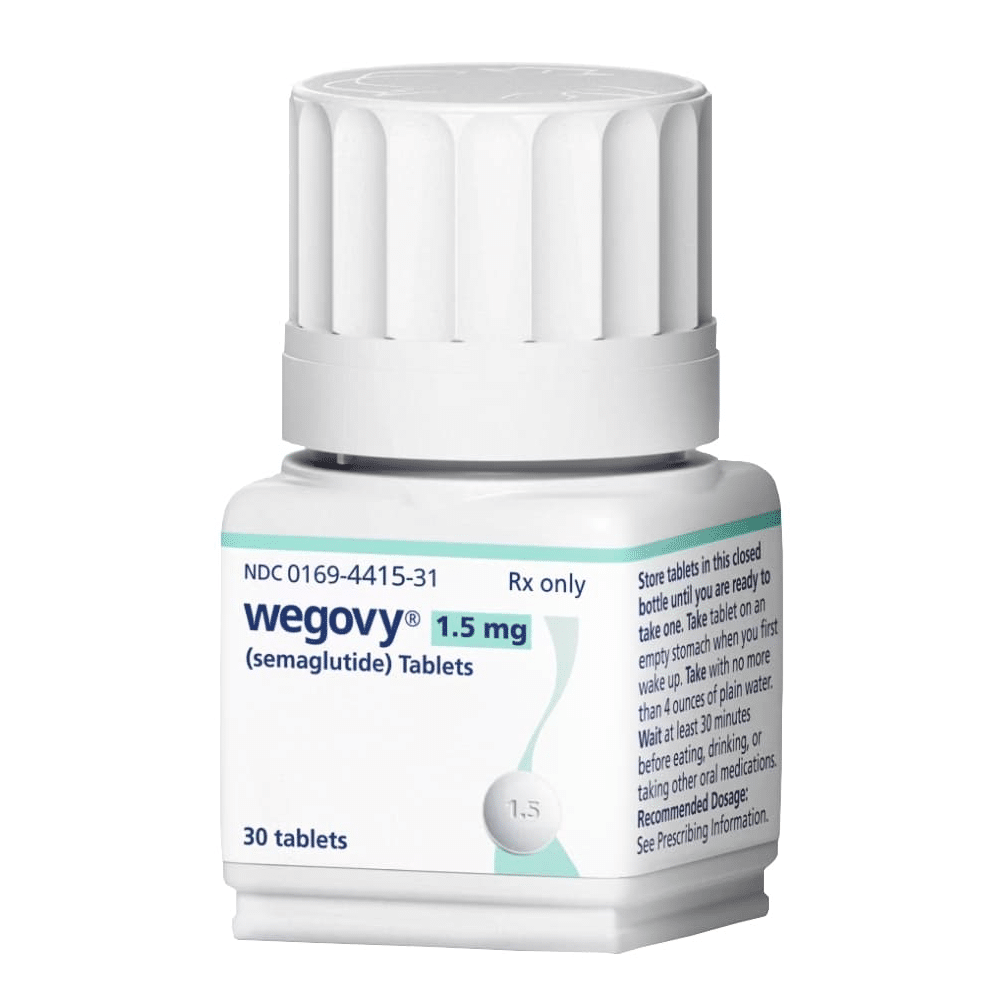
Wegovy Tablets
- Expected to be available in the UK later in 2026.
- Once daily tablet for weight loss that shown to help lose an average of 14% body weight over 68 weeks in clinical trials.
- Contains semaglutide, the same active ingredient as Wegovy tablets.

Discreet Packaging

UK Based
-
About Wegovy tablets
Wegovy tablets are an oral version of the Wegovy weight loss injection. The key difference is that instead of being given by injection once a week, it is taken as a once‑daily tablet. The tablets and injections contain the same active ingredient, semaglutide, and so are used to support weight loss in the same way.
If approved in the UK, the tablet version could broaden access by offering an option for people who are unable, or prefer not, to use injections
-
How do Wegovy tablets work?
Wegovy tablets contain the same active ingredient as Wegovy injections: semaglutide. This means that they work in the same way.
Semaglutide is a medicine known as a GLP-1 receptor agonist. This means it takes on the role of GLP-1 in your body, a natural hormone responsible for managing your blood sugar and regulating your appetite.
By mimicking this hormone, the Wegovy tablets work by:
- reducing appetite and food cravings (food noise)
- helping you feel fuller for longer after meals
- regulating blood sugar, preventing spikes and food cravings
Is Wegovy the same as Rybelsus?
Both Wegovy tablets and Rybelsus tablets contain semaglutide, meaning they work as GLP-receptor agonists. However, they’re approved to treat different conditions, and have different maximum doses:
- Wegovy: approved to treat type 2 diabetes and weight loss in injection form (Wegovy tablets have not yet been approved for use in the UK). Comes in 1.5mg, 4mg, 9mg and 25mg doses.
- Rybelsus: approved to treat type 2 diabetes. Comes in 1.5mg, 5mg and 9mg.
What’s the difference between Wegovy tablets and injections?
Here are the biggest differences between Wegovy tablets and injections, based on information provided by the manufacturer:
- Doses: Both the tablets and injections start at a lower dose and increase over time. However, the actual doses are different as your body takes in the medicine in different ways. For injections the medicine is absorbed into the bloodstream, while tablets are taken in through the digestive system.
- Efficacy: On average, people taking the tablets lose around 14% of their body weight during clinical studies, compared to around 21% with the injections.
- Frequency: You take the tablet once a day in the morning. The injection is taken once a week.
Wegovy tablets are not yet approved in the UK, but they are expected to become available later this year.
-
Wegovy tablets effectiveness in clinical trials
Wegovy tablets have been shown to be effective in helping lose weight, compared to a placebo.
The OASIS 4 trial, carried out in late 2025, looked at the use of oral semaglutide (Wegovy tablets) in adults who were overweight or obese over 71 weeks. Importantly the tablets were only studied over the course of 68 weeks.
The average weight lost among participants who were taking Wegovy tablets was 14% of their total body weight.
Over 1 in 4 people (28%) taking Wegovy tablets lost over 20% of their body weight over 68 weeks, showing similar numbers to 7.2mg Wegovy injections, which had an average weight loss of 21% over 72 weeks.
-
Wegovy tablets dosage
The current Wegovy tablet doses available in the US are:
- 1.5mg
- 4mg
- 9mg
- 25mg
Like with injections, the manufacturer recommends when taking Wegovy tablets you start at a lower dose, so your body can adjust to the medication.
You can then slowly increase your dose if your current strength isn’t providing the results you want, and your healthcare professional agrees it’s suitable.
If you are looking to move to a higher dose, you’ll usually do so after taking your current dose for at least 30 days.
Importantly, as the tablet is absorbed into the body in a different way, the doses are not the same as Wegovy injections.
-
Wegovy tablets eligibility
As Wegovy tablets are not yet available in the UK, we do not currently know who will be eligible to use them if they get approved.
However, it could be possible that the same criteria are used for the tablets as is for the injections, as is the case in the US.
This would mean the criteria would be:
- a BMI of 30 or more
- a BMI of 27 or more (if you have a health condition, like high blood pressure)
Similarly, it might be the case that the list of those the medication is unsuitable for remains the same. This may include people who:
- are pregnant, trying to get pregnant, or breastfeeding
- have a history of pancreatitis, or inflammation of your pancreas
Wegovy tablets on the NHS
Current NHS requirements for Wegovy injections in the UK may indicate what the eligibility for Wegovy tablets could be in the future.
Currently, you may be prescribed Wegovy weight loss injections if diet and exercise have not worked alone, you have a health problem due to your weight and a BMI of either:
- 35 or more
- 30 or more if you meet criteria to be treated by a specialise weight management service
However, we don’t know if and when Wegovy tablets will become available on the NHS.
-
Wegovy tablets availability
In the UK, Wegovy tablets could be available for weight loss in the UK later in 2026.
They are currently under review and will need to be approved by the Medicine and Healthcare Regulatory Agency (MHRA), as well as the National Institute for Health and Care Excellence (NICE).
If the tablets are approved for use in the UK, it will be available through legitimate and regulated online services, like myPharmacy.
Wegovy tablets became widely available in the USA early in 2026, after being approved by the U.S. Food and Drug Administration (FDA) a few months earlier.
-
Wegovy tablets cost
It’s not currently known how much Wegovy tablets will cost in UK. The cost will depend on a few factors, like:
- the price the manufacturer (Novo Nordisk) sets for the UK market
- availability of Wegovy pills in the UK
- what strength/dose someone is taking
-
Understanding different weight management treatment options
Wegovy Tablets Wegovy Injections Mounjaro Injections Xenical Mysimba Active Ingredient Semaglutide Semaglutide Tirzepatide Orlistat Naltrexone & Bupropion Manufacturer Novo Nordisk Novo Nordisk Eli Lilly Roche Orexigen Doses 1.5mg, 4mg, 9mg, 25mg 0.25mg, 0.5mg, 1mg, 1.7mg, 2.4mg, 7.2mg 2.5mg, 5mg, 7.5mg, 10mg, 12.5mg, 15mg 120mg 8mg/90mg Price (£) TBD £90–£200 £140–£350 £45–£70 £90–£115 Weight loss during clinical studies 14% 21% 22.5% 5–10% 5–8% Frequency 1 tablet daily Once-weekly injection (1 pen = 4 weeks) Once-weekly injection (1 pen = 4 weeks) 3 tablets daily at mealtimes 1–4 tablets daily Availability TBD Private: following consultation.NHS: BMI 30+ with health problems due to weight. Private: following consultation.NHS: BMI 30+ with 4+ obesity-related health concerns. Private: following consultation.NHS: BMI 30+ with other weight-related conditions. Private: following consultation. -
Directions of use
The directions for Wegovy tablets (as they’ve been approved in the US) are as follows:
- Take one tablet a day. Take first thing in the morning, on an empty stomach, with a small sip of water.
- Tablets are swallowed whole. They cannot be split or crushed.
- Wegovy tablets should be taken at least 30 minutes before you eat, drink, or take any other medication.
-
Potential side effects of Wegovy tablets
Like any medication, Wegovy can cause side effects in some, though in clinical trials they were usually mild and manageable. Side effects are most likely to happen when you first start treatment but will usually go away on their own as your body gets used to the medication.
Common side effects during clinical trials included:
- nausea or vomiting
- diarrhoea
- constipation
- sulphur burps
-
Warnings
The manufacturer states you should or avoid this medication if:
- you are under 18, pregnant or breastfeeding
- have a personal or family history of certain types of thyroid cancer
- are allergic to semaglutide
- have multiple endocrine neoplasia syndrome 2
-
Storage information
According to information provided by Novo Nordisk (for the Wegovy tablets that are currently approved in the US) to store your medication safely, you should:
- keep tablets at room temperature (between 20°C to 25°C)
- store in a dry place away from moisture (consider avoiding bathrooms)
- keep tablets in their original bottle, with the lid tightly closed
- keep out of reach of children
Importantly, there is currently no requirement for these tablets to be refrigerated, unlike the Wegovy weight loss injections.
-
Frequently asked questions about Wegovy tablets
Are Wegovy tablets cheaper than weight loss injections?
Currently, we do not know what the price of Wegovy tablets will be in the UK, even compared to weight loss injections, as it has not yet been approved by the MHRA.
Will Wegovy tablets be available on the NHS?
If approved in the UK, it’s likely that Wegovy tablets will eventually be available on the NHS. This is because Wegovy injections are already available on the NHS.
-
Sources
- Wegovy® Safety and Side Effects. Novo Nordisk. [Accessed on 7 April 2026].
- Weight Management Injections (Including Semaglutide). NHS England. [Accessed on 7 April 2026].
- How to Start Wegovy®. Novo Nordisk. [Accessed on 7 April 2026].
- What to Pay for Wegovy®. Novo Nordisk. [Accessed on 7 April 2026].
- Obesity Management and Pharmacotherapy (2025). BMJ. [Accessed on 7 April 2026].
- Effect of Semaglutide on Weight Management (2025). New England Journal of Medicine. [Accessed on 7 April 2026].
- Semaglutide Tablets (Rybelsus®): Changes in Formulation, Dosing and Tablet Size (2025). NHS Tayside Area Drug and Therapeutics Committee. [Accessed on 7 April 2026].
- EMA Concludes Review of Weight-Management Medicine Mysimba. European Medicines Agency. [Accessed on 7 April 2026].
- Pharmacological Treatment of Obesity: A Review (2011). International Journal of Obesity. [Accessed on 7 April 2026].
- Once-Weekly Tirzepatide in Adults with Overweight or Obesity (2022). New England Journal of Medicine. [Accessed on 7 April 2026].
- Semaglutide and Long-Term Weight Outcomes (2025). PubMed. [Accessed on 7 April 2026].